
Ever scrolled through a group chat and spotted someone typing “icl” before a surprisingly honest message? You’re not alone in wondering about it. ICL meaning in text is simple: it stands for “I can’t lie,” and people use it to introduce an honest opinion, a confession, or a genuine reaction.
The abbreviation shows up in texts, comment sections, captions, and direct messages, mostly among younger users. It works as a casual signal that what comes next is sincere, whether that’s praise, a confession, or a blunt opinion.
In this guide, you’ll learn what ICL means, how it’s used on different platforms, how to read it from a girl or a guy, how it differs from similar slang like NGL and TBH, and how to reply when someone sends it.
Quick Answer: What Does ICL Mean in Text?
ICL means “I can’t lie.” It’s a texting abbreviation people place before an honest statement, such as an opinion, a compliment, an admission, or a reaction.
For example: “icl, that was the best episode of the season.”
What Does ICL Mean in Text?
In text conversations, ICL works as an opener that tells the reader, “I’m being genuine here.” It frames the message that follows as candid rather than polite filler.
The phrase isn’t literal. Nobody is claiming they’re physically unable to lie. Instead, it’s a conversational habit, similar to starting a sentence with “honestly” or “to be real.”
ICL is:
- Casual and informal, best suited for friends and peers
- Flexible, since it can introduce good news, bad news, or a confession
- Usually lowercase, often typed quickly as “icl” with no punctuation
What Does ICL Stand For?
ICL stands for “I can’t lie.” Each letter maps directly to the phrase: I (I), C (can’t), L (lie).
Some people write it as “ICL” in capitals, while others use lowercase “icl.” Both mean the same thing. Occasionally you’ll see it stretched into a fuller sentence, like “I can’t lie, that’s impressive,” which is the same idea spelled out.
ICL Meaning in Slang and Gen Z Conversations
In Gen Z slang, ICL is part of a family of shorthand phrases that mark honesty and authenticity. Younger users often prefer abbreviations that keep a message quick, relaxed, and conversational.
Within this slang, ICL carries a few typical flavors:
- Candid: “icl, I didn’t expect to like it this much.”
- Vulnerable: “icl, I’ve been really stressed lately.”
- Playful: “icl, you looked ridiculous in that photo.”
It often appears alongside other slang such as “fr,” “ngl,” and “tbh,” and tone usually comes from the rest of the message and any emojis attached.
How Is ICL Used in Text Conversations?
ICL is almost always followed by a statement. What that statement is determines how the whole message reads. Here are the most common patterns.
ICL Before an Honest Opinion
This is the most common use. The writer shares a real view on something, often without sugarcoating.
“icl, that new album is overrated.”
ICL Before a Personal Admission
People use ICL to soften or introduce something slightly vulnerable or embarrassing.
“icl, I still haven’t finished my homework.”
ICL Before a Compliment
Starting a compliment with ICL makes it feel more genuine and less like routine flattery.
“icl, you’re really good at drawing.”
ICL Before Criticism
ICL can also precede a critical remark. The abbreviation signals honesty, but the criticism itself can still land hard, so tone matters.
“icl, the ending felt rushed.”
ICL Before a Surprising Reaction
When something catches someone off guard, ICL helps express that unfiltered reaction.
“icl, I did not see that twist coming.”
ICL Meaning on Social Media
The meaning of ICL stays the same across platforms: “I can’t lie.” What changes is the style and setting in which people use it.
What Does ICL Mean on TikTok?
On TikTok, ICL commonly shows up in comments and captions, usually to share a candid reaction to a video. A comment like “icl this made my day” signals sincere enjoyment. Creators also use it in captions to introduce a confession or hot take.
What Does ICL Mean on Snapchat?
On Snapchat, ICL appears in quick chats and Snap captions. It still means “I can’t lie,” and it’s typically used for fast, informal reactions between friends, like “icl this filter is hilarious.”
ICL Meaning on Instagram
On Instagram, you’ll see ICL in comments, DMs, and Story replies. A reply like “icl, this outfit is fire” is a compliment framed as a genuine reaction. In captions, it often sets up a personal or honest thought.
ICL Meaning on WhatsApp
On WhatsApp, ICL appears in personal chats and group conversations. It works the same way: someone says “icl, I’m exhausted” or “icl, great idea” to add sincerity to the message.
ICL Meaning on Discord
Discord users often use ICL in servers and voice-chat text channels, especially in gaming and community discussions. For instance, “icl, that last match was rough” fits the relaxed, conversational tone common on the platform.
What Does ICL Mean From a Girl?
When a girl uses ICL, it means exactly what it means from anyone else: she’s about to say something honest. The abbreviation itself doesn’t carry a hidden message based on gender.
What matters is the context. If she says “icl, I had a great time tonight,” she’s likely expressing genuine enjoyment. If she says “icl, that’s not my favorite idea,” she’s offering a candid opinion. Read the full message and your relationship with her rather than the abbreviation alone.
What Does ICL Mean From a Guy?
From a guy, ICL has the same meaning: “I can’t lie.” It introduces a sincere statement, whether that’s a compliment, an opinion, or a confession.
A message like “icl, you’re funny” is simply a genuine compliment. Whether it signals anything more depends on the rest of the conversation, not on the abbreviation itself.
ALSO READ THIS: LFG Meaning: The Ultimate Texting & Gaming Guide (2026)
Is ICL Romantic?
Not by itself. ICL is a neutral honesty marker, not a romantic expression. It’s used between friends, classmates, teammates, and family just as often as between people who like each other.
It can appear in a romantic context, such as “icl, I’ve been thinking about you,” but the romance comes from the message that follows, not from ICL. If you’re unsure, consider the relationship, the tone, and other signals like emojis or how often the person reaches out.
Is ICL Positive or Negative?

ICL is neither positive nor negative on its own. It simply introduces honesty, and the honest content can be good, bad, or neutral.
- Positive: “icl, you did amazing.”
- Negative: “icl, I didn’t enjoy that.”
- Neutral: “icl, I’m not sure what to eat.”
The sentiment is always determined by the words that come after it.
Is ICL Rude?
ICL isn’t rude by itself. It’s a casual way of signaling honesty. However, it can come across as blunt if it’s used to introduce criticism or a harsh opinion.
Because ICL signals “I’m being fully honest,” the following statement can feel sharper than it would otherwise. Pairing it with a kind tone or a softening emoji can help. For example, “icl, I’d tweak the intro a little 😅” lands more gently than a flat criticism.
ICL Examples in Texting
Here are practical examples showing how ICL appears in different situations.
Honest Opinion
“icl, I think the first version was better.”
Personal Admission
“icl, I forgot we had plans today.”
Compliment
“icl, your cooking is seriously good.”
Disagreement
“icl, I don’t totally agree with that.”
Surprise
“icl, I’m shocked they won.”
Food Review
“icl, this pizza is the best I’ve had in months.”
Gaming Conversation
“icl, that boss fight took me like twenty tries.”
School Conversation
“icl, I barely understood today’s lesson.”
ICL Conversation Examples
These short dialogues show how ICL sounds in natural chats.
Example: Movie Discussion
Sam: Did you like the movie?
Jordan: icl, it was way better than I expected.
Sam: Same! The soundtrack was great.
Example: Compliment
Maya: Do you like my new haircut?
Alex: icl, it looks really good on you.
Maya: Aww, thank you!
Example: Personal Admission
Chris: icl, I’m kind of nervous about tomorrow.
Taylor: That’s normal. You’ve prepared a lot.
Example: Disagreement
Riley: I think the sequel is the best one.
Jamie: icl, I liked the original more.
Riley: Fair, the first one was strong too.
Example: Emotional Conversation
Dana: icl, I’ve been feeling pretty overwhelmed lately.
Priya: I’m glad you told me. Want to talk about it?
How to Understand ICL From Context
Because ICL only introduces what follows, context is everything. These four checks help you interpret it correctly.
Look at the Words After ICL
The sentence after ICL carries the real meaning. A compliment means the message is positive, while a complaint means it’s critical.
Consider Your Relationship
A close friend using ICL is probably just being casual and candid. From a coworker or someone you barely know, it may come across as more direct, so consider how well you know them.
Consider the Topic
The subject matters. ICL about a movie or food is usually lighthearted, while ICL about feelings, relationships, or problems may be more serious.
Check Emojis and Punctuation
Emojis, punctuation, and capitalization shape tone. “icl 😂 that was funny” feels playful, while “ICL. I’m disappointed.” reads as serious.
ICL vs. NGL: What’s the Difference?
NGL means “not gonna lie.” It works almost identically to ICL and is used to introduce honest statements.
| Term | Full Form | Typical Use |
| ICL | I can’t lie | Introduces an honest or genuine statement |
| NGL | Not gonna lie | Introduces an honest statement, often with a “this might surprise you” tone |
In practice, they’re largely interchangeable. ICL can sound slightly more emphatic or heartfelt, but the difference is subtle and depends on the speaker.
ICL vs. TBH: What’s the Difference?
TBH stands for “to be honest.” Like ICL, it signals candor, but it’s an older and more widely recognized abbreviation.
- TBH is common across age groups and can be used in slightly more neutral contexts.
- ICL feels more informal and is more closely tied to younger, online conversation styles.
Both can be used before opinions, compliments, or admissions.
ICL vs. IMO: What’s the Difference?
IMO means “in my opinion.” It marks a statement as a personal view rather than a fact.
The key difference is purpose. IMO acknowledges that something is subjective, while ICL emphasizes honesty or sincerity. For example, “imo, the film was too long” presents an opinion, while “icl, the film was too long” suggests the speaker is admitting something candidly.
ICL vs. FR: What’s the Difference?
FR stands for “for real” and is generally used to agree with someone or emphasize sincerity.
- ICL introduces what you’re about to say.
- FR often confirms or reacts to what’s been said, such as “that movie was great, fr.”
FR can also be a standalone reply meaning “I agree,” which ICL typically isn’t.
Why Do People Use ICL Instead of “I Can’t Lie”?
People use ICL because it’s fast, casual, and fits the rhythm of text conversation. Shortening phrases saves time and gives messages a relaxed, natural tone.
There are a few other reasons:
- Speed: Three letters are quicker to type than three words.
- Tone: It sounds more conversational and less formal.
- Culture: Abbreviations help people sound like part of an online peer group.
When Should You Use ICL?
ICL works best in relaxed, informal conversations where honesty is welcome.
Good Situations to Use ICL
- Chatting with friends about movies, music, games, or food
- Giving a genuine compliment to someone you know well
- Sharing a lighthearted admission, like forgetting something or being tired
- Offering a casual opinion in a group chat or comment section
When Should You Avoid Using ICL?
Skip ICL in situations where the tone should be more formal or where bluntness could cause harm.
- Professional emails or workplace messages with managers, clients, or colleagues you don’t know well
- Serious or sensitive conversations, where clear, complete sentences are better
- Delivering harsh criticism, since ICL can make it feel sharper
- Formal writing, such as school assignments, applications, or official communication
Common Misunderstandings About ICL
ICL Doesn’t Mean Someone Is Literally Unable to Lie
It’s a figure of speech. The phrase signals honesty in the moment but doesn’t claim the speaker never lies.
ICL Doesn’t Automatically Mean Something Negative
Many people assume ICL introduces bad news, but it’s just as often used for compliments and positive reactions.
ICL Doesn’t Always Indicate Seriousness or Romantic Interest
It can be casual, joking, or lighthearted. It doesn’t mean the topic is serious, and it doesn’t signal attraction unless the rest of the message does.
How to Reply When Someone Says ICL?
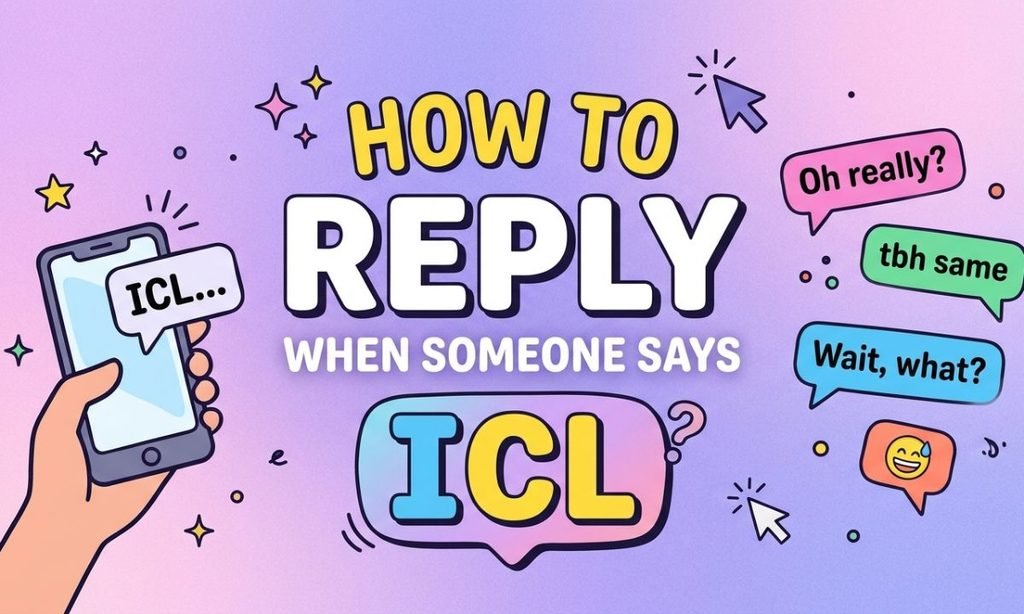
Your reply should respond to what came after ICL, not to the abbreviation itself.
If You Agree
Keep it simple and affirming.
“Same, honestly. I felt that too.”
If You Disagree
Stay polite and explain your view.
“Fair, but I actually liked it. What didn’t work for you?”
If Someone Shares Something Personal
Respond with care and support rather than slang.
“Thanks for telling me. I’m here if you want to talk.”
If Someone Compliments You
Accept it warmly.
“That means a lot, thank you!”
Can ICL Have Other Meanings?
In texting and social media, ICL almost always means “I can’t lie.” However, abbreviations can carry different meanings in other fields.
- Implantable Collamer Lens: In eye care, ICL refers to a type of vision-correction lens.
- Inductance-Capacitance-Load or other technical uses: Some industries use ICL as shorthand for specialized terms.
- Organization or company abbreviations: ICL can also be the name or acronym of various businesses and institutions.
If you see ICL in a casual chat, it means “I can’t lie.” In medical, technical, or professional documents, check the surrounding context to confirm the meaning.
ICL Meaning in Modern Digital Conversations
ICL reflects how online communication favors short, expressive phrases that carry tone as well as information. Abbreviations like ICL, NGL, and TBH let people sound candid without writing long explanations.
Slang changes quickly, so usage and popularity vary across communities and over time. Still, ICL has become a familiar part of casual digital conversation, especially in chats, comments, and captions.
Frequently Asked Questions About ICL
What Does ICL Mean in Gen Z Slang?
In Gen Z slang, ICL means “I can’t lie,” used to introduce an honest opinion, confession, or reaction. It signals that the speaker is being sincere and unfiltered.
What Does “TS PMO ICL” Mean?
“TS PMO ICL” is a string of slang abbreviations, commonly read as “this s*** pisses me off, I can’t lie.” It’s an expression of frustration, with ICL adding that the speaker is being honest about it. Meanings of such strings can vary, so context helps.
What Does IDC Mean in Chat?
IDC means “I don’t care.” It’s used to show indifference or that the speaker has no strong preference, though it can sound dismissive depending on tone.
What Does IOL Mean in Slang?
IOL commonly means “iterating out loud,” or sometimes “laughing out loud” in a playful variant of LOL, depending on the community. Because it isn’t as standardized as other abbreviations, check the context to confirm the intended meaning.
Is PMO a Bad Word?
PMO usually stands for “piss me off,” which contains mild profanity when spelled out. The abbreviation itself is informal and not formal language, so it’s best avoided in professional or school settings.
What Does TMO Mean in Chat?
TMO most commonly means “tomorrow” in casual chat. In some contexts it can be shorthand for other terms, so check the conversation to be sure.
What Does SYBAU TS PMO Stand For?
SYBAU TS PMO is a slang string that combines “shut your b**** a** up” with “this s*** pisses me off.” It’s a strongly worded, profane expression of anger, so it’s not suitable for polite or professional conversation.
What Does IK Stand For?
IK stands for “I know.” People use it to agree, acknowledge something, or show they’re already aware of what was said.
What Does SK Mean on Snapchat?
SK is less standardized and may vary by user group or community. It’s sometimes used as shorthand for “sk8” (skate) or “ok” style replies, so it’s best to ask the person or check the context rather than assume one fixed meaning.
Conclusion
ICL stands for “I can’t lie,” and it works as a casual honesty marker in texts, comments, and chats. The ICL meaning in text doesn’t change based on who sends it or which platform they’re on, though the tone depends on the message that follows.
It can introduce compliments, confessions, opinions, or criticism, so reading the context, relationship, and emojis helps you understand what the sender really means. It’s closely related to NGL, TBH, and similar expressions, but each has its own subtle feel.
Remember that slang meanings can shift depending on the situation and community. When in doubt, look at the full message, consider who sent it, and ask if you want to be sure.
